Blog

  • Boat Life In Gisborne

    At the moment we are in Gisborne, visiting Mum’s side of the family. It’s raining here but the sunshine is really nice.

    The passage here was a bit rough around Palliser Bay, but it usually is. Afterwards it was nice coming into the harbor and relaxing.

    We celebrated Great Aunt Catherine’s birthday yesterday. It was really fun! She was turning ninety, so we had a big cake with ninety candles on it!

    I’m getting used to boat life and homeschooling (though very slowly). The small space is not so bad now and the tiny galley (boat slang for kitchen) isn’t so tiny anymore.

    I hope that everyone back home is having a good time!

    Best wishes,
    Iris 🙂

  • Unravelling the thread – preparing for offshore sailing

    Sometimes pulling a thread on a piece of clothing is a bad idea, but perhaps on an offshore yacht it’s a good idea. A simple fuel bleeding recently led to a full haulout and weeks of work on Dog Star.

    During the rigging refit I noticed that the engine was running rough as we motored to the fuel dock, just before we arrived the engine stopped! Thankfully we were only moving slowly and there was no wind, so after a quick prayer to Huey the engine spluttered into life and we finished the job. Later inspection found the fuel line’s hose clip had come loose on the secondary fuel pump. I tightened it up and began bleeding the engine. We had a bit of trouble and so asked our mechanic to show us around the engine and teach us how to properly bleed it.

    “While you’re there mate, what do you think of the PSS seal?”

    “I think it’s in a pretty bad state, I don’t want to freak you out, but you need to replace that immediately.”

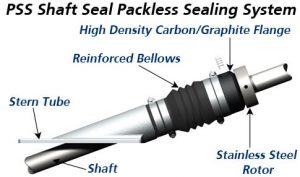
    A PSS seal is a dripless shaft seal, it uses a carbon disc and a steel disc facing each other to create a seal, one face spins, the other is static. The very fine clearance between the discs creates a complete seal. Ours was a dripping dripless seal, which is what freaked out the mechanic.

    Diagram of PSS Seal
    Diagram of PSS Seal

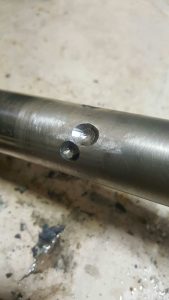
    We hauled our Dog Star out and had Travis come checkout the boat and replace the shaft seal, we asked him to look at our faulty ShaftLok at the same time, the lock mechanism was totally worn out and never worked. In the process of pulling this off, our mechanic found more bad news. Someone had decided to try and “fix” the shaftlok by drilling a number of holes in the shaft….

    …the horror…

    Holes in the shaft
    6 holes like this

    A 70hp motor pushing 12 tons of boat through the water generates a huge amount of twisting force, our 1.25 inch shaft was already at the lower end of the recommended size for our boat and engine combo. This meant a new shaft, which meant a hole drilled in the skeg to remove it. The worst thing about a sheared shaft would be the combination of water flooding into the engine compartment and no drive after plugging the leak.

    The thread however, continued to unravel. In the process of removing the propellor I noticed it was very brittle and crumbly, years of poor maintenance meant that at some point there was probably no anode on the shaft, and the propellor acted as an anode in its place, electrolysis had stuffed it.

    Now we await a new shaft and prop to arrive and be fitted, but the good news is, we are ditching the shaftlok and going for a Flexofold prop, which should mean silent and faster sailing when the motor isn’t running.

    All in all, I see this as a good thing. Bit by bit we’re finding and fixing everything, I know once we’re 500 miles from anywhere, I’ll sleep better knowing this has all been found and sorted. There is more to the unravelling, but I’ll save that for the next post.

  • Rigging upgrade

    The biggest job for us on Dog Star is to have the rig replaced, the single largest expense (other than buying a boat!). New Zealand registered ships must pass a safety inspection and be certified to Category 1. Part of this is having a rig in good order, a lot of people say a rig lasts 10 years, we have no idea how old Dog Star’s is, so it’s time to replace it. In particular, we wanted to do the following:

    • Replace standing rigging and running rigging
    • Fix the broken vang tang
    • Recondition the mast step
    • Brush, sand, prime and paint the mast and spreaders
    • Put a through-bolt through the mast and step (Cat 1 requirement)

    Also, we need to replace the lifelines with the correct gauge of wire, 4mm for a boat of 12m, and replace the quick release shackles with pelican clips, again for Cat 1 compliance.

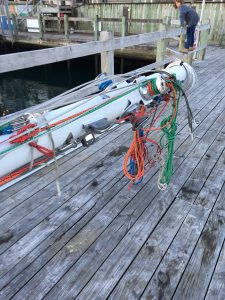
    Alex up the mast getting ready for the crane

    Lifting the mast out when it’s 15m tall requires a decent size crane.

    Mast base is tricky to remove when the wires are Sikaflexed into place

    Unfortunately when the mast was lifted the riggers had to cut the wires to free them from the mast base. This was partly because all the wires passed through a 25mm pipe in the mast step that was filled with Sikaflex. Removing the mast base to clean it up was quite difficult. it couldn’t be lifted more than about 2cm off the deck, so I had to spend about an hour digging out Sikaflex with a sail needle.

    Once the mast base was off we took it home to paint it. A later step was to have the reefing lines, vang, outhaul, topping lift and main halyard led back to the cockpit, which meant 10 blocks which needed to be attached to padeyes through the deck. We decided that the less holes the better, so instead went for a base plate under the mast step to hold the blocks.

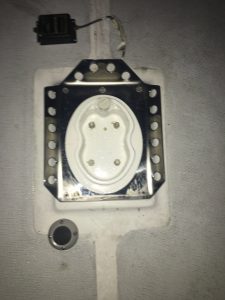
    A stainless steel mast plate fabricated to site under the step.

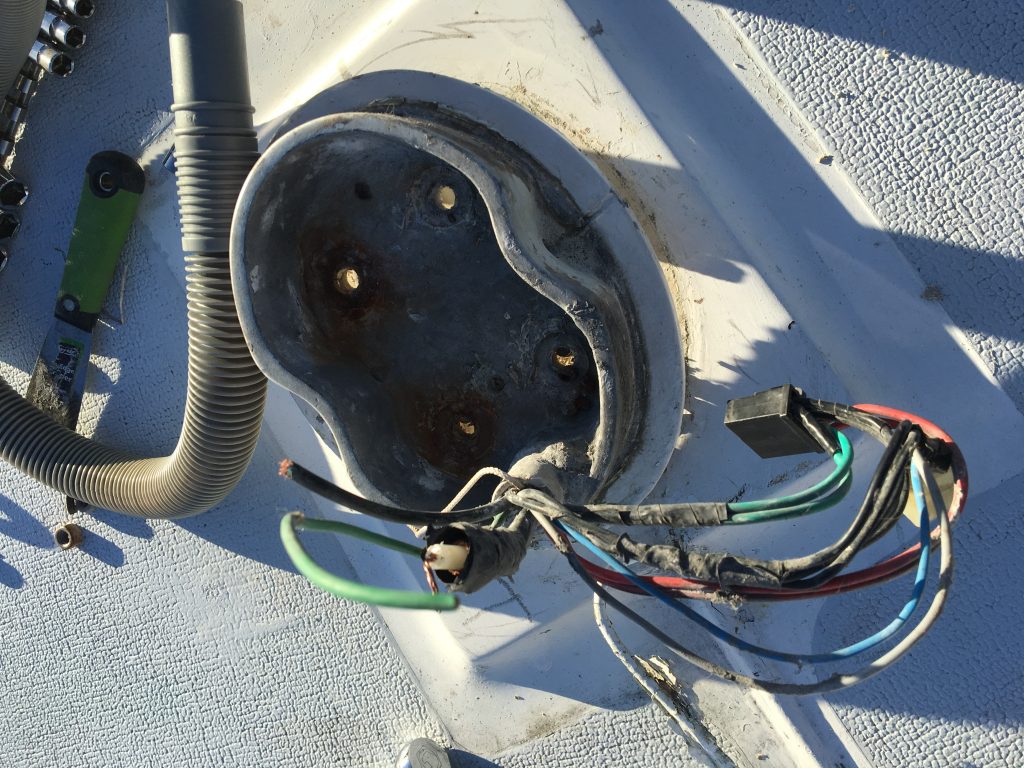
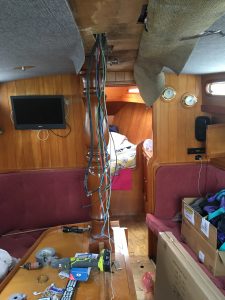
    Inside the boat the wiring was very difficult to trace, there were no easily accessible panels in the headliner, so I decided to remove small parts of it to gain access and route the wires up to the mast. In the picture above you’ll see a cable gland on the bottom left, this was part of a decision to have the wiring come out from the side of the mast, down a conduit into the deck. The reason for this was twofold, avoiding the nightmare of removing the mast step for the next person to take the mast out and to avoid any water ingress from inside the mast into the cabin top. Dog Star is a super dry boat, but the one spot I did find some water damage was in the headliner underneath the wiring from the mast.

    Pulling apart the headliner
    Pulling apart the headliner to find the wiring
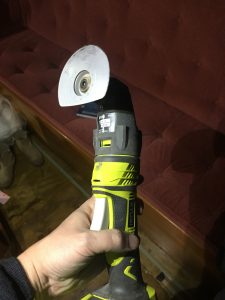
    A very useful tool for slowly removing the headliner.

    The new wiring will be much easier for the next owner to service, by removing a small panel in the headliner, access to the joins in the wiring will be possible, meaning that they won’t need to cut wires when removing the mast.

    New halyards and standing rigging
  • Betway Neukundenbonus: Alles zu den Bedingungen und Fristen

    Der Kickoff: Warum der Bonus sofort Aufmerksamkeit verdient

    Du sitzt am Rechner, die Quoten flimmern, und das Wort “Bonus” springt dir ins Gesicht – das ist kein Zufall, das ist das Versprechen von Betway, das Spielvergnügen sofort zu verstärken.

    Einzahlung, Einsatz und das Kleingedruckte

    Erstmal das Offensichtliche: Du musst mindestens 10 € einzahlen, sonst bleibt das Wortspiel beim “Bonus” stehen. Und das ist erst der Anfang.

    Betway verlangt, dass du den Bonus innerhalb von 30 Kalendertagen mindestens 5‑fach umsetzt. Das bedeutet, wenn du 50 € Bonus bekommst, musst du 250 € an qualifizierten Wetten abräumen – kein Scherz, kein Ausweichmanöver.

    Die Wettbedingungen: Was zählt, was nicht

    Nur Wetten mit einer Quote von 1,40 oder höher zählen. Kombiwetten? Ja, solange jede Einzelselektion die Quote erfüllt. Live-Wetten? Ausschließlich im Rahmen regulärer Sportarten, keine Casino‑Spielereien.

    Hier ein Beispiel: Du setzt 20 € auf ein Fußballspiel mit 1,50, das wird als 30 € qualifiziertes Wetten gezählt. Du hast 20 € gewonnen, aber das zählt ebenfalls – die Zahlen bauen sich zusammen.

    Fristen und Verfall – Der Countdown läuft

    Der Bonus verfällt nach 30 Tagen, egal ob du ihn vollständig umgesetzt hast oder nicht. Und das ist nicht nur ein Hinweis, das ist ein fester Zeitrahmen.

    Außerdem gibt es ein Maximallimit von 100 € Bonus. Wenn du mit einer 200 €‑Einzahlung startest, bekommst du nur die vollen 100 € – die restlichen 100 € bleiben außen vor.

    Auszahlung: Wenn der Gewinn endlich greifbar wird

    Nach Erfüllung aller Wettanforderungen kannst du deine Gewinne abheben, aber erst nach einer zusätzlichen Verifizierung. Das bedeutet, du musst deinen Ausweis, deine Adresse und deine Bankverbindung bestätigen – kein Geld fließt, bis das erledigt ist.

    Und hier ein Trick: Wenn du deinen Bonus verwechselst mit Bonusgeld, das du sofort auszahlen willst, wirst du schnell merken, dass das nicht geht. Das Geld ist nur „Spielfähig“, bis die Bedingungen erfüllt sind.

    Der rechtliche Rahmen: Was du nicht übersehen darfst

    Betway operiert unter Lizenz von der Malta Gaming Authority. Das bedeutet, die Regeln sind streng, die Kontrollen streng. Wenn du gegen die AGB verstößt, ist das Konto sofort gesperrt – und das ist keine Übertreibung.

    Ein weiterer Punkt: Du musst volljährig sein, also mindestens 18 Jahre alt und in einem Land wohnen, das von Betway akzeptiert wird. Versuch es nicht, wenn du nicht in den erlaubten Jurisdiktionen bist.

    Der schnelle Überblick – Dein Praxisplan

    Einzahlung >10 € → Bonus bis 100 € → 5‑fache Umsetzung in 30 Tagen → Qualifizierte Wetten nur mit Quote ≥1,40 → Verifizierung abschließen → Auszahlung möglich.

    Wenn du das alles im Kopf behältst, wird dein Bonus nicht zum Gespenst, sondern zu einer echten Gewinnchance.

    Jetzt handeln

    Registriere dich, tätige deine erste Einzahlung und setze deine 5‑fache Wette sofort, sonst verfliegt das Geld wie ein Staubwirbel. Der Countdown tickt und jede Minute zählt – also los, hol dir den Bonus über sportwetten-anbieter-bonus.com und setz deine Strategie um.
  • Wetten auf das Eurovision Song Contest Halbfinale – So geht’s richtig

    Warum das Halbfinale das eigentliche Goldgrube ist

    Die meisten Quotenjäger fliegen direkt zur Finalshow, als wäre das der einzige Ort, an dem Geld fließt. Fehlentscheidung. Das Halbfinale ist das wahre Spielfeld für clevere Banker, weil hier die Datenlage dünn, die Emotionen hoch und die Buchmacher noch nicht komplett durchschaut sind. Hier geht’s um schnelle Gewinne, nicht um langfristige Dramen. Und das bedeutet: Jetzt zuschlagen, bevor die Masse eintrifft.

    Timing ist alles – Setze deine Wette, bevor die Hitliste brennt

    Ein kurzer Blick auf die Statistiken der letzten fünf Jahre zeigt: Die ersten 30 Minuten des Halbfinals produzieren im Schnitt 40 % der gesamten Wettvolumen. Warum? Die Frühbucher fahren mit dem „Early‑Bird‑Vorteil“ und sichern sich Top‑Quoten, bevor der Markt korrigiert. Wenn du also nach dem Aufschlag deines Lieblingsacts wartest, sinkt deine Chance schneller als ein abgerutschter Mikrofonstab. Tipp: Lade deinen Lieblings‑Betting‑Account schon am Vorabend, setze den Limit‑Alarm und gehe dann ins Live‑Tracking.

    Strategische Einsatzarten – Mehr als nur den Sieger tippen

    Hier ein Crash‑Kurs: 1) „Country‑Blind‑Bet“ – setze auf den Gesamtscore der Länder, nicht auf den Song. 2) „Jury‑Underdog“ – die Expertenfavoriten sind oft überbewertet, insbesondere wenn das Publikum bereits stimmte. 3) „Stimm‑Mitte‑Boost“ – setze auf das mittlere Drittel der Punktevergabe, dort liegen die häufigsten Fehlkalkulationen. Und hier ist der Deal: Kombiniere mindestens zwei dieser Varianten in einem Parlay, um die Kombinationsquote zu maximieren, ohne das Risiko zu sprengen.

    Analyse‑Werkzeuge, die du sofort nutzen solltest

    Verlass dich nicht nur auf das Bauchgefühl. Nutze die öffentlichen Abstimmungsdaten, die nach jedem Auftritt live on‑screen flackern. Sie zeigen dir, welche Länder bereits überkauft sind und wo noch Luft nach oben ist. Kombiniere das mit Social‑Media‑Sentiment‑Tracking – ein kurzer Tweet‑Scan kann dir verraten, ob ein Künstler im Trend liegt, bevor das offizielle Voting startet. Und denk dran: Während das Publikum jubelt, kalkulieren die Buchmacher. Hier entsteht die Lücke, die du ausnutzen musst.

    Risiko‑Management – Was du nie vergessen darfst

    Setz nicht dein gesamtes Kapital auf einen einzigen Song, das ist ein No‑Go. Verteile dein Budget auf drei bis fünf Wetten, die sich thematisch ergänzen. Nutze das „Stop‑Loss“-Feature deines Buchmachers, um Verluste zu begrenzen, sobald du 20 % deines Einsatzes verloren hast. Und wenn du ein echter Profi sein willst, halte einen kleinen Gewinn‑Puffer von 5 % auf deinem Account, um bei schwankenden Quoten flexibel zu bleiben.

    Der eigentliche Knackpunkt – das Spiel mit den Quoten

    Jeder Buchmacher hat einen versteckten „Margin‑Puffer“, den er über die Ausgangsquote legt. Dein Job ist, diesen Puffer zu umgehen, indem du die Quote kurz vor dem Live‑Start beobachtest und bei der ersten Mini‑Korrektur zuschlägst. Das funktioniert besonders gut bei Ländern, die traditionell stark performen, aber in diesem Jahr unter der Erde bleiben. Und hier ein letzter Hinweis: Schau dir die „Bet‑Slip‑Historie“ deines Lieblings‑Buchmachers an – dort findest du versteckte Muster, die du sofort in deine nächste Wette einfließen lässt.

    Mehr Tipps findest du auf wettenschweizhub.com. Und das bedeutet: Setze jetzt, analysiere sofort, sichere dir die besten Quoten – sonst bleibst du im Regen stehen.